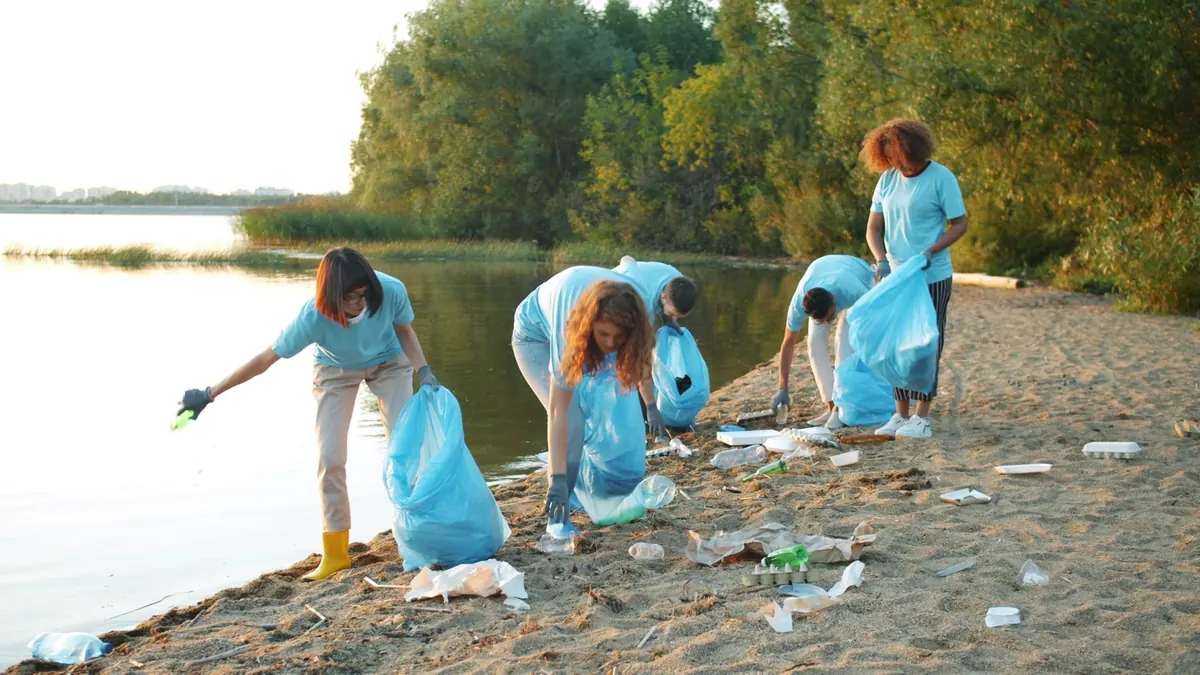
Picking a wet wipe the size of a tea towel out of Thames mud at low tide is not glamorous work. It is, though, strangely satisfying, and it is one of the few kinds of environmental volunteering in London where you can see exactly what you achieved before lunch. The river is far cleaner than it was when it was declared biologically dead in the 1950s, but every tide still delivers a fresh load of bottles, cotton bud sticks, polystyrene and plastic wrapping, much of it washed out of drains and tributaries. Volunteers are the reason a good deal of it gets taken away again.
What a Foreshore Cleanup Actually Involves
Most people imagine a river cleanup as a pleasant stroll with a bin bag. On the tidal Thames it is closer to a treasure hunt across a mudflat. The river drops twice a day, uncovering a strip of foreshore that is underwater the rest of the time, and that is the window when cleanups happen — usually a couple of hours either side of low tide.
Volunteers work in pairs along an agreed stretch, filling bags and often counting or recording what they find so that charities can argue for better rules on problem items such as wet wipes and single-use bottles. Some sites are gravel and reasonably firm underfoot. Others are deep, slick mud that will try to keep your boots. Expect bending, squatting, hauling bags and a bit of climbing on slippery steps. Expect to be filthy and tired by the end.
One thing worth knowing before you go: most of the Thames foreshore is owned or managed by the Port of London Authority, and organised cleanups hold the permissions needed to be there. Turning up alone with a bin bag is not the same thing, and in some areas you would need a permit even to dig or metal detect. Start with an organised event.
Who Runs Cleanups on the Thames
Several organisations run foreshore and riverbank events in London. The main ones:
- Thames21 — the best-known charity working on the tidal Thames, running regular foreshore cleanups, towpath litter picks, citizen science projects and training for volunteer leaders.
- Thames Estuary Partnership — a partnership body that coordinates river groups and campaigns for a cleaner estuary; useful for finding events and local contacts.
- Port of London Authority — not a volunteer organiser, but it publishes tide information and foreshore safety guidance, and licenses events. Worth following if you want to understand the river.
- Local river and friends groups — cleanups happen on tributaries too, including the Wandle, Brent, Lee and Ravensbourne, often run by small community groups and borough-level "friends of" organisations.
- Big one-off events — the annual Thames River Clean Up draws volunteers to multiple sites on the same day, and national clean-up weekends in spring and autumn sometimes include river locations.
- Corporate volunteering days — if your employer has a scheme, ask whether it partners with a river charity. These days fill up quickly, so book early.
If you are looking at canals and docks rather than the tidal river, the Canal & River Trust runs its own volunteering programme, which is a gentler introduction.
What to Wear and Bring
Dress for a building site crossed with a muddy beach, not for a picnic. Loose jewellery, open-toed shoes and anything you care about should stay at home.
- Wellies or sturdy boots with grip. Trainers will be sucked off in soft mud.
- Old trousers and long sleeves, plus a waterproof jacket and a hat.
- Rubber or gardening gloves — organisers often provide them, but bring your own if you have them.
- A refillable water bottle and a snack for afterwards.
- Hand sanitiser and a spare bag for wet, muddy kit.
- A change of shoes and socks left in the car or at home for the journey back.
Most events supply litter pickers, bags, gloves and sometimes a picker's belt. If you are asked to bring your own, a basic litter picker costs very little and lasts for years.
Staying Safe on the Foreshore
The Thames is a working river with fast tides, deep mud and a lot of sharp objects. None of that should put you off, but it does mean following the briefing properly. The tide comes in faster than people expect, and the water level can rise by metres within a couple of hours, so never wander away from the group or past the point the leader has marked.
Watch for glass, metal, needles and sewage debris. Keep cuts covered, wash your hands before eating or drinking, and don't eat while you are on the foreshore. The river carries a small risk of leptospirosis, a bacterial infection spread through rat urine in water and mud; if you develop flu-like symptoms in the weeks after a cleanup, tell a GP you have been working in river water. If you are pregnant, immunocompromised, or recovering from an injury, check with a medical professional before joining a foreshore session, and ask the organisers about age limits for children.
Other basics: never go onto the foreshore alone, follow the route the leader sets, and be honest about your footing. If you feel unsteady on steep access stairs or deep mud, say so.
What Happens on the Day
- Register in advance. Most events are ticketed and numbers are capped, so you will usually be asked to sign up online and will be sent a meeting point.
- Arrive a few minutes early at the meeting point. There is a safety briefing, a registration form and a handover of gloves, bags and pickers.
- Walk down to the foreshore as a group and split into pairs along the working stretch. You keep an eye on one another and on the water.
- Work for roughly two hours, filling bags and setting them above the tide line for collection.
- Return to the meeting point to drop off kit, wash your hands and hand back any equipment. Findings are often weighed or logged.
If Picking Up Litter Isn't for You
There is plenty of river volunteering that doesn't involve a bin bag. Citizen science schemes train people to record litter density and wildlife, which feeds directly into campaigning. Towpath and park cleanups are easier going than the foreshore and suit families better. Events always need people on logistics: registering arrivals, carrying kit, taking photographs, running the social media account. And if you get hooked, training as a volunteer leader is how these sessions keep running at all.
How to Get Started This Month
Follow two or three of the organisations above, then look for an event near you — Hammersmith, Putney, Rotherhithe, Erith and Rainham all host sessions at various points in the year. Pick one that is described as suitable for beginners, book it, and tell the organiser when you arrive that it is your first time. Check tide times beforehand so you understand why the start time is fixed, and bring a friend if you are nervous.
Your first cleanup will probably leave you muddy, slightly stiff and quietly proud. Bring a spare pair of socks. And if the foreshore feels like too much at first, start on the towpath — there is no shortage of rubbish, and no shortage of people who would rather it went in a bag than out to sea.
Photo: Vitaly Gariev / Pexels