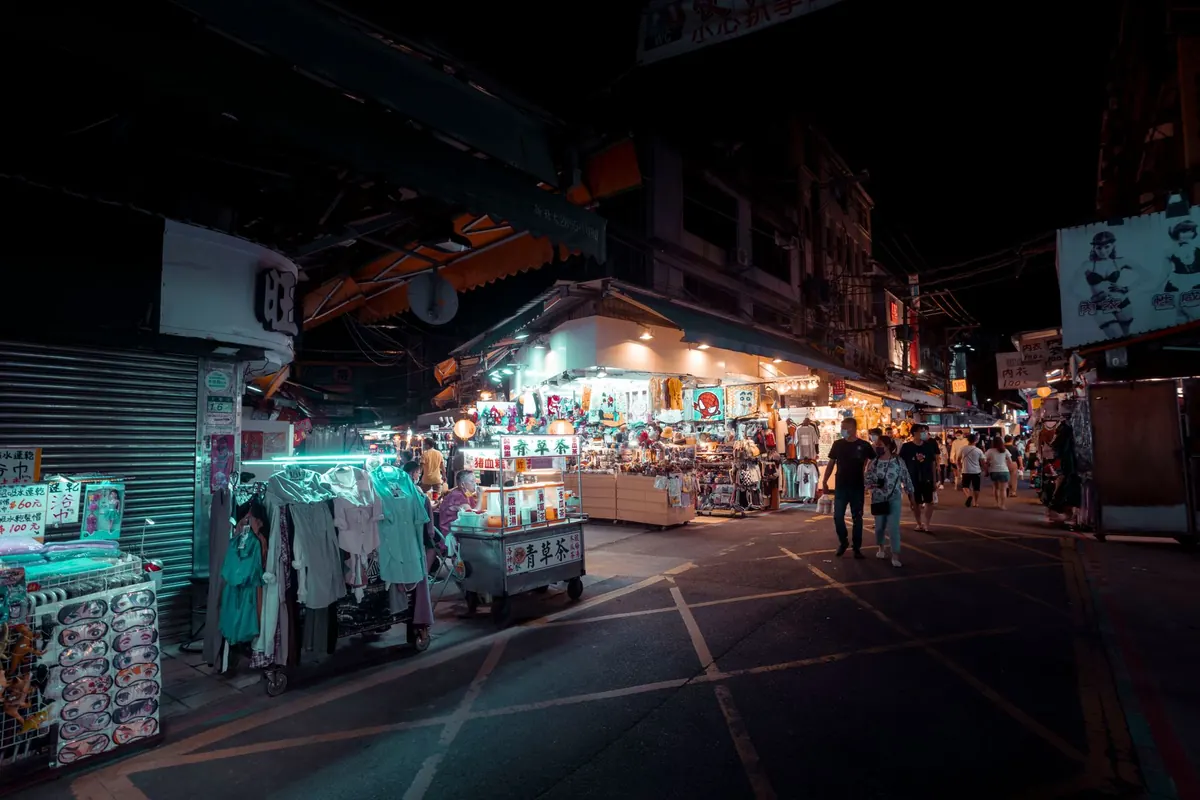
The smell of charcoal and jerk seasoning reaches the end of Union Street before you see the stalls. It is quarter past seven on a Thursday, and the railway arches behind London Bridge are still filling up. A decade ago this stretch of Bermondsey went quiet once the last commuters had gone. Now the queue for a plate of something hot snakes past a closed print works and a letting agent's window.
Evening markets have become one of the quietest, most effective ways to bring a high street back to life after dark. Camden and Brick Lane have traded late for decades, but the newer wave in Southwark, Hackney and a few neighbouring boroughs works differently: smaller, food-led, often temporary, and deliberately tied to the streets around it.
The evening shift, and where it started
Two things made this possible. London has a huge stock of railway arches, yards and light-industrial buildings within a short walk of a station — exactly the spaces a market needs, and exactly the spaces that are hard to let to conventional retail. At the same time, the residential population of inner boroughs changed. More renters, fewer families with cars, more people who eat their main meal out and treat their neighbourhood as somewhere to spend an evening.
The results are visible across a short stretch of the map. The arches around Maltby Street and Bermondsey. Flat Iron Square and Vinegar Yard near London Bridge. Mercato Metropolitano in Elephant and Castle, which turned a former paper works into an all-day food hall. Further east, Hawker House in Canada Water and the cluster around Netil Market, Gillett Square and Chatsworth Road in Hackney. Similar things are happening in Lewisham, Lambeth and Walthamstow, usually in the same kind of leftover space.
Why the high street is the natural host
A borough high street has a specific problem. It is busy at lunchtime, dead by half past six, and lined with shopfronts that cannot justify evening staffing.
Markets solve a version of that. A landlord with an empty yard or a row of closed units would rather have a licensed market than fly-tipping. Councils with regeneration budgets like the footfall. Business improvement districts like having something to promote. And a market does what a shop window cannot: it puts people on the pavement, walking slowly, past doors they would otherwise never notice.
What traders actually gain
For a cook or a maker, a pitch is a far smaller commitment than a lease. No five-year rent review, no fit-out, no rates bill to argue about. You can trade two evenings a week and keep a day job. You can test a menu on real customers and change it the following week. Plenty of London restaurants began as one stall in a yard.
What you do need is paperwork. In most boroughs that means a street trading consent or pitch agreement, food hygiene registration with the council, public liability insurance, and a named person responsible for gas, electricity and fire safety. Alcohol and recorded music bring further permissions. Costs and rules vary widely by borough and by site, so read the terms properly before you commit to a season.
The knock-on effect — and who pays for it
The obvious winners are pubs, bars and convenience stores within a two-minute walk. A market hands them a pre-drinks crowd at seven and a last-orders crowd at ten. Some high street businesses start closing at eight instead of six on market nights, which means rewritten rotas and later shifts for staff.
The less comfortable part is what happens when it works. A popular market raises the profile of an area, and rising profile tends to mean rising rents. Traders who worked a scrappy pitch for years can be edged out by operators with deeper pockets, and a landlord on the same street suddenly has options. A market is not automatically good for everyone on the high street; the ones that last tend to be the ones where organisers thought about that early.
What separates a good night market from a bad one
Having been to a lot of these, the difference is rarely the food. It is the boring infrastructure.
- A reason to stay. Somewhere to sit, ideally covered, and a licence that runs later than the last food order.
- A mix that changes. Regular traders who build a following, plus rotating pitches so there is a reason to come back in three weeks.
- Light, shelter and loos. A yard at 10pm has to feel safe, and a wet Tuesday in February needs a plan.
- Transport thinking. Proximity to a station, somewhere to lock a bike, and a note online about the last train.
- Cleaning agreed in advance. Who collects the bins, who hoses the pavement, who pays for the extra sweep.
- One person in charge on site. A manager with a radio and a phone number traders can actually reach.
The friction: licensing, noise and neighbours
The most common reason an evening market fails is not footfall. It is a licensing committee, a noise complaint, or a residents' group that was never consulted.
London's licensing landscape is genuinely fragmented. Southwark, Hackney, Islington and Lambeth all handle street trading, temporary event notices and late-night refreshment differently, and requirements change. If you are organising anything involving alcohol, amplified music or trade past 11pm, talk to the council's licensing team early — before you book traders, not after. If you are a resident with a complaint, the same team is the right first stop, and a dated log of specific incidents is almost always taken more seriously than a general objection.
This is general information, not legal advice. Licensing rules, pitch terms and permissions vary by borough and by site, so take proper advice on your own circumstances.
Planning your evening — and your pitch
If you are going: check the market's own social accounts on the day, because line-ups change and bad weather cancels things. Arrive before eight if you want to eat sitting down. Take a card or a phone, as most pitches are cashless. And if you find a stall you like, say so — small operators live on repeat customers and word of mouth far more than on advertising.
If you are thinking of trading: visit three times before you apply, at the start of the night and at the end. Ask two traders already there what the pitch really costs once you add gas, insurance and wasted stock. Work out your break-even in plates, not in hope. Then start with one evening a week, get the paperwork straight, and let the queue tell you whether to add a second.
The high street after dark is not going to be fixed by one big idea. It is a lot of small ones — a lit yard, a decent queue, a pub that stays open an extra hour. Night markets manage all three at once, and the boroughs that get the details right are the ones where it lasts.
Photo: Jimmy Liao / Pexels